
Listen to your intuition: When you zero in, you create great things 

Photo by the author

Your intuition knows where you need to be, but you’re caught up in the drift. Sometimes there is a gap between where you are, and what is desired. The idea of “mission and values” are very powerful concepts, but when you’re being caught in the drifting force of other people’s priorities, moving forward is a chore.

Seth Godin pointed out this gap: “The calendar belongs to everyone else. Their schedule isn’t your schedule unless it helps you get where you’re going.”

Intuition is one of the keys to action, which is the most important precursor to closing the gap and realizing your mission. This is sometimes easier than it really is, when you’re pulled in direction that is not your own.

One of my favorite quotes on Intuition was made by the late Steve Jobs, who embodied an internal awareness that created great things. He said: “Have the courage to follow your heart and intuition. They somehow already know what you truly want to become.”

Zero in on your intuition, and it will help you zero in on where you want to be. How do you get out of your current rut?
  1. Start writing. Journaling your ideas unlocks the floodgates to change. It might feel awkward at first, but it helps you zero in.
  2. Read something – not the news, but something out of the box, inspiring to you, or motivational. Let great minds inspire you.
  3. Make a list of “the gaps”. Name and label the gaps. Keep it simple.
  4. You may want to do a classic Pareto Chart(80/20) chart. What are the 20 percent affecting the 80 percent? https://www.reliableplant.com/Read/2251/pareto-chart
  5. Do a chain analysis on each of the gaps. An old school “Root Cause Analysis”https://limblecmms.com/blog/root-cause-analysis-rca/ is helpful for developing your intuition.
  6. Take a moment to reflect. Let your intuition guide you. Mindfulness is another tool. https://www.tarabrach.com/
  7. Begin looking at small changes first. Take actionable small steps toward closing the gap. Remember: Imperfect Progress is progress.
  8. Reevaluate, and repeat. Check whether you are zeroing in on your mission or vision

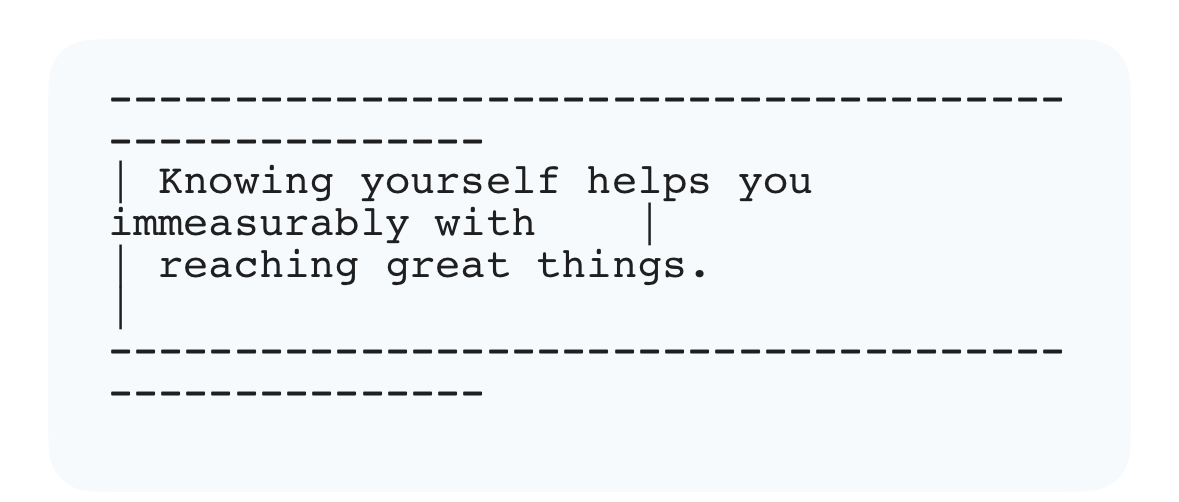
Knowing yourself helps you immeasurably with reaching great things. As you continue these steps, you will discover so many ideas, opportunities, and action steps that will hone your intuition and future direction.


The avoidance Trap – moving through the Haze

Avoidance can be a most insidious and destructive emotion. It is a hidden barrier that affects all human beings.

So much energy is spent avoiding things we don’t prefer, don’t want to address, and don’t want to feel. It is the human condition, and affects every one of us. Robert Pirsig said it must succinctly in his seminal work: Zen and The Art of Motorcycle Maintenance: “The truth knocks on the door and you say, ‘Go away, I’m looking for the truth,’ and so it goes away. Puzzling.” 

The reasons for avoidance has as its basis personal protection, and minimizing pain. Sigmund Freud believed that as human beings we seek to avoid pain and move toward pleasure. Really who wants pain? No one. We employ avoidance as a natural defense. Avoidance in the long run can lead to long term and chronic illness, fatigue, and mental health issues. As Bessel Van der Kolk underlined in his book: “The Body Keeps the Score”, the body really does keep the score, and avoidance defenses are at the core of it. Individuals who experience Trauma, live with the insidious reminder that in order to survive, they have to avoid.

How do you move through the haze of avoidance? The path ahead means identifying the emotions that are blocking you. It means identifying “what” you don’t want to face. Reducing the blocking emotions of avoidance includes:

  1. Identifying the emotion- whether it is fear, the bad feelings, or the catastrophic thinking.
  2. Reducing the avoidance emotion. Utilizing therapy, professional help. You have to reduce your body’s tendency to employ your fear mechanisms.

Take the next steps:

  1. Desensitize (reduce) the fear, by taking small steps toward embracing aspects of the issue, by behaving in a way that faces the avoidance issue.
  2. Problem Solve: Identify the next steps or alternative actions to gradually move through what you’re avoiding. Sometimes therapy or other self help resources or friends are important accountability structures. Share the worry.
  3. Take your time. Once you begin to work through the avoidance, the “haze” will clear, and you will notice your confidence and emotions improve.


Three steps to giving feedback in the workplace

There’s value in exploring what feedback means to the giver and receiver. (Photo by the author)

Giving feedback to others might feel like the most unglamorous of tasks. It’s also easy as a manager or leader to fall prey to the avoidance trap when it comes to being the messenger. Feedback seems like a virtue, and comes across like a judgement.

No one likes to deliver what could be perceived as bad news. It’s natural human behavior to minimize being perceived as the “bearer of bad news.” We want to be liked. Feedback really doesn’t have to be seen as negative…it could be validating or strength based.

A “strength based” definition of feedback:

  • It is “necessary”
  • It has a specific purpose
  • It is “kind”

I would offer another definition: “It communicates empathy and concern and explores different sides to the story”

The Problem:

One of the reasons feedback can go wrong in employee meetings is that feedback is delivered in a way that makes the one receiving it feel invalidated or misunderstood. What is intended to help, leads to judgement. Managers end up feeling like they are walking a minefield.

3 Steps to delivering helpful, necessary and kind feedback:

1.) Tie the feedback to positive performance objectives. Make sure you are pointing out what you like and what you would like to see change in terms of specific behavior. Use an “I Statement”, rather than a “You Statement”. Avoid judgements.

2.) Ask the Employee whether they perceive your concern in the same way. Explore whether they perceive it the same or different way. There’s value in exploring what feedback means to the giver and receiver. Tell them you value their ideas.

3.) Ask for a potential solution from the person who is receiving the feedback. Rather than imposing solutions, ask for a solution. Have the employee give you advice on steps, and build a collective agreement.

Thoughts and reflections:

What ways have you noticed feedback has worked, and not worked in the workplace?

How can you turn feedback into a collaboration rather than a negative experience?

Building and Maintaining Personal Resilience in Difficult Times (Part One)

Resiliency Is Uneasy Growth

According to the Centers for Disease Control and Prevention, “Mental health includes our emotional, psychological, and social well-being. It affects how we think, feel, and act. It also helps determine how we handle stress, relate to others, and make healthy choices.”

All age groups are included.

https://www.cdc.gov/mentalhealth/learn/index.htm

When faced with difficult circumstances or challenges the natural inclination is to avoid, bury ourselves in something or potentially engage in destructive habits or behavior.

The journey through hard times is uneasy. Growth can be uneasy. Resiliency implies that we focus on our well being, where we focus on a positive outcome. Needless to say, if we are resilient, we are flexible and we begin to experience that uneasy growth.

Just like materials that bend and return back to the same shape, individuals can persevere and become stronger as they become resilient.

What is Personal Resilience?

  1. We are able to weather personal storms with a forward facing approach.
  2. They have “Grit”
  3. We have ample social/emotional supports in our lives
  4. We have gratitude for what we have 
  5. We are productive, and work through adversity using the resources we have.
  6. We utilize our strengths to overcome weaknesses, set backs

A resilient person learns to navigate through tough situations, and experiences.

How to Use Silence with Others

20150228-084538.jpg

Photo by the author

Silence is something more of us should do.  The more social media that I read, the more I think that humankind has a need to be heard, to always respond.  Despite the need to respond, we don’t always want someone to give us feedback.  Feedback is sometimes the hot button that just makes a person clam up.

The opportunities around silence are immense.  

  • Silence from others, allows us to process what is affecting us.  Immediate feedback only disrupts this process.
  • Silence communicates a respect when you are listening.  It allows others to know you are present with them, not discounting what they are saying.
  • People in pain, don’t need automatic response.  They need presence.
  • Silence keeps us from sometimes saying something we should not say.  It keeps us out of hot water.

Knowing when to be silent and when to respond.

  1. Respond when the person appears ready to accept your response.  Keep your eye contact focused on the other person.  Keep a safe but engaged distance
  2. Silence means you are processing what is being said.  Respond only when you are expected to respond, ask questions, configure your language to reflect what is being said
  3. Responding is not always necessary.   Respond in ways that you would like others to respond to you.  Take time to focus on other’s immediate needs.

Asking permission to respond is a respectful transition.  The other person will let you know when they are ready to receive your response.  Then they will be ready to complete the transition.

Mentoring is Not About Showcasing Your Superiority 


When you’re charged with the responsibility of teaching or mentoring others, the way you proceed may result in developing or hindering others.

A Story: “I was once a customer in a well known fast food establishment.  The main customer service staff was mentoring a new staff member.  The lines were long and the veteran staff member shouted orders to the new staff member, but showed him little about the task at hand.  At one point he said: ‘Now for a test…let’s see if you can make one of these….’  As the mentor provided a dramatic showcase for waiting customers concerning his superiority, the new employee looked at us with a frustrated desperation of: ‘What have I got myself into?'”

The lesson: I walked away embarrassed.  As a manager myself, it appeared repulsive that the veteran employee would substitute a teaching moment where support is offered, with a selfish demonstration of how good he was.

Making a Good Mentor: The lesson is that good mentoring is about (or any teaching) is delivering assistance with support, not showcasing your superiority.  

  1. As a mentor you are as much a learner, as a teacher.
  2. Superiority is about you, not the development of others.  It means if I have to look better than you, I must feel pretty weak.
  3. Mentoring is not about discouraging others 
  4. Good mentoring should make others feel more confident.
  5. Teaching others is not about testing them, especially in front of customers. That makes your customers doubt your organization’s capacity.

The sad lesson from the story above is that the veteran employee in all his confidence actually made himself and the organization look bad.  

Teaching capacity in others is about being humble, supportive and caring.  

If you don’t care about the people you teach, how can you expect them to take care of the organization?

Eliminating the Gap Between Good Intentions and Follow Through

As Thomas Jefferson said: “If you want something that you’ve never had, you must be willing to do something you’ve never done.” 
The gap between getting from point A to B is one of personal fortitude.  A key attribute between meeting your intentions by following through is related to how much ownership you possess.  

Jefferson appears to imply that getting a result is inherent on how much you desire to follow through.  

Sadly, good intentions miss the mark when our desire is based on something other than having clear ownership for the goal.

Closing the Saying and Doing Gap

What are the qualities needed to follow through? 

  1. Explore how much you want something.  Know what it means to you, and why.  Failure to answer the why…you need to question whether you have the right objective.
  2. Does your heart (beliefs, feelings) tell you that you’re on the right track?
  3. Make a ‘graded task assignment’ – break the follow through into manageable chunks. 
  4. Create an accountability structure.  Who is going to keep you accountable for getting there. Set up reporting periods.
  5. Examine what failing would be like.  What are the consequences of inaction?  What are the costs and benefits?
  6. What do successes look like?  What is the payoff to follow through?

Develop the spirit to stretch beyond what you think is your capability.  Do something you’ve never done.

Learning to Power Through Bad Habits


Counterproductive habits or behaviors come in many shapes and sizes.  They also have different impacts on a person.  The worst habits are the ones that are subtle, and gradually sap away your motivation and capacity.

Subtle habits that slow your capacity:

  1. Poor sleep habits 
  2. A focus on overspending 
  3. Negative thinking
  4. Unwholesome thoughts
  5. Conflict with others
  6. Deep animosity
  7. Holding onto anger
  8. Obsessing over details
  9. Not getting results

Little by little, these behaviors erode our best efforts.  They dull our senses, and waste valuable talents.  They are time stealers, and suck our internal resources away.  

Letting Go:

The hardest part of giving up an unproductive aspect of ourselves is the perceived comfort we get from engaging these behaviors.  

As one colleague stated: “We love what we hate, and hate what we love.”

Ways to power through:

We begin moving through at the very moment we decide we don’t want these problem behaviors to define us any longer.  

Taking the short and long views around change:

The Short View: What can I stop doing today? This the list of immediate actions we have in our grasp.

The Long View: What repeated daily habits do I need to incorporate to see better results?  The long view is where we look at the growth factors around our change:

  1. What we need to put into building new skill sets
  2. Who we need to forgive
  3. Forgiving ourselves
  4. Changing specific target habits
  5. Engaging health
  6. Changing our methods 

Whatever the long view, it is a mission of sorts, and one that requires navigation and a daily commitment.

Questions For Today—

  1. What 3 behaviors can I stop today?
  2. Can I make a long term plan to change, and begin today?

10 Ways to Move Forward When You Feel Stuck

 
Photo by the author

Like the flower that blooms in the Spring, it takes the right conditions to break through the ground.  Breaking through personal obstacles is really no different.

The Rut: Anything that is keeping you stuck from where you’re desiring to go.  

Other ways that describe being stuck:

  1. I’m in a job I dislike
  2. I’m not moving forward in my role 
  3. I can’t get ahead of the bills
  4. My boss doesn’t seem to recognize the contribution I make
  5. I feel blah all the time 

Recognizing you’re stuck is 50% toward the solution.  Some don’t even see they’re stuck until a crisis hits. Being stuck wasn’t something that happened once or twice, it’s something that progressed over time.

10 Ways to move beyond stuck

  1. Look at what is actually not stuck: Leverage those resources
  2. Identify your supports – or seek out support
  3. Look at self sabotage – ways your choices are making it harder to succeed
  4. Ask yourself: What does being stuck really mean…what does it require me to do?
  5. What one tipping point do you need that would make the difference?  
  6. Are your expectations holding  you back?  Are they the right ones?
  7. Are you doing more, or expecting more?
  8. What do I need to do less of, and more of?
  9. Learn, expand.
  10. Understand that struggle is making you stronger

Not moving down a desired path doesn’t mean you aren’t moving.  It means something is taking a different direction unintended.

Moving beyond a challenge requires concerted effort to understand the patterns around you, many of which need discovered.

Work through being stuck by identifying the pattern in operation, then choose a set of new patterns that may lead to different results.